Beyond Hibiki 35 Arita: The Rarity and Buyback Value of Early Hibiki 30 Gold Flower Editions

Want to know what this bottle may be worth?
Send photos and we will give an initial estimate based on edition, box and certificate, fill level, and bottle condition.
WhatsApp photo quoteMany customers ask whether Hibiki is still worth collecting. The answer is not simple. As Hong Kong older-whisky buyers, we see millions in funds move between rare spirits daily. Collectors know the Hibiki 35 Arita and Kutani porcelain releases of 2016 for tiny production and exceptional craftsmanship. Yet the underlying Suntory older-blend benchmark, with an irreplaceable foundational position among experienced owners, is Hibiki 30, first released in 1997—particularly early Gold Flower labels.
This whisky embodies Suntory's century of whisky-making philosophy and marks Japanese whisky's transition from local speciality to global luxury. From a professional buyer's perspective, we examine Hibiki 30 Gold Flower history, flavour changes, authentication and recent buyback references to help assess your collection's sale value. To compare other Hibiki age statements, see the Hibiki 12 Flowers and Birds page for that expression; it is not a quotation for Hibiki 30 Gold Flower.

1. Hibiki's Cultural Symbols and the Birth of Gold Flower
Hibiki's philosophy is rooted in harmony between people and nature. In 1989, for Suntory's 90th anniversary, second-generation president Keizo Saji launched the range with the ambition of creating the finest Japanese whisky.
Hibiki 30's visual design is a cultural narrative. Its classic 30-faceted crystal bottle, made by Kagami Crystal, symbolises long cask maturation. Echizen washi, with 1,500 years of history, gives the label traditional artistic depth.
This article uses Gold Flower for early Hibiki 30 packaging from its approximately 1997 launch to around the 2007 redesign. Exact production and circulation dates still require checking labels and provenance. A prominent gold flower emblem on the front label and a golden double-door Kannon-biraki wooden box resembling a traditional Buddhist shrine distinguish it. The author describes the early Gold Flower's individuality as the last light of a wilder era. The packaging's 1997–2007 circulation period cannot be treated as the distillation period of spirit aged 30 years or more, nor can it establish recipe changes at the two distilleries.

2. Flavour Comparison: Early Gold Flower Versus Modern Releases
Hibiki 30's value comes from a complex blend of malt and grain whiskies aged at least 30 years, some matured for more than three decades in rare Mizunara oak.
The following comparison of early Gold Flower and modern flavours preserves the author's discussions with experienced drinkers. Sensory descriptions are not equivalent to verified recipe changes or fixed buyback premiums:
| Tasting dimension | Early Gold Flower, approximately 1997–2007 | Modern release, 2007 onwards |
|---|---|---|
| Nose | Strong Mizunara smoke, like intensely burning sandalwood and temple incense, with heavy dark leather and raisins. | Elegant Mizunara fragrance leaning towards kyara incense, with ripe apricot, mango and candied-fruit sweetness. |
| Palate | Dense and syrupy, with more forceful dark chocolate, Eastern spices and cinnamon. | Silky, rounded and highly harmonious, combining dried figs, rich toffee and cedar in balance. |
| Finish | Exceptionally long, with pronounced bittersweet balance and deep old-oak notes. | Long and delicate, with light cinnamon and characteristic cool Mizunara notes. |
The author describes the difference as a movement from bold exuberance towards exceptional harmony. This is a tasting observation; official recipes for the two editions have not established specific changes in proportions.
3. Scarcity: The Collecting Tension Between Hibiki 35 Porcelain and Hibiki 30 Gold Flower
Why can Gold Flower command as much buyback interest as smaller limited releases? Consider physical constraints and underlying value.
In 2016, Suntory marked 400 years of Japanese porcelain with Hibiki 35 Arita and Kutani editions. Blending spirits aged 35–54 years, bottled non-chill filtered at 47% ABV, each was limited to 150 bottles. The suggested price at release was ¥700,000 before tax, over HK$40,000. Hibiki 35 is closer to an artistic installation, with value heavily dependent on porcelain craftsmanship and the makers' reputation.
Gold Flower instead has a steadier investment appeal as a benchmark for liquid value. Suntory's 2017 introduction states that only a few thousand Hibiki 30 bottles can be produced annually. The original text uses around 2,000–3,000 as a reference, rather than verified 2026 output, attributing scarcity to reduced production during the late-1980s Japanese whisky downturn and current shortages of mature stocks.

Hibiki 30 Versus Hibiki 35: Collecting Comparison
| Dimension | Early Hibiki 30 Gold Flower, double-door box | Hibiki 35 Arita / Kutani, 2016 |
|---|---|---|
| Production quantity | Continuing limited production, but early editions now extremely scarce after consumption. | Only 150 bottles of each edition. |
| Alcohol strength | 43% ABV, classic blended strength. | 47% ABV, non-chill filtered. |
| Core value | Historical identity, depth of liquid and strong drinking and trading value. | Porcelain art and cultural celebration. |
| Collecting audience | Whisky tasting specialists and experienced enthusiasts. | Leading global art collectors and prominent public and business figures. |
4. Hibiki Buyback Price Guide for 2026
Suntory raised older releases' official retail prices in April 2026, with Hibiki 30 moving from ¥360,000 to ¥415,000 before tax. Secondary-market buyback values have already departed from producer pricing and are driven by demand, supply and edition scarcity.
Here are the article's higher 2026 Hong Kong market references for Hibiki. No transaction samples or dates for the underlying foreign-currency figures are provided. Original HKD figures are retained and cannot be treated as verified same-day buyback offers; actual prices require confirmation of edition and physical condition:
- Early Hibiki 30 Gold Flower with golden double-door box: The most sought-after combination. For complete, clean-labelled examples, the original text lists a buyback valuation reference of HK$100,000–120,000 , with exceptional or auction-grade examples potentially reaching HK$178,000.
- Modern Hibiki 30, current white or leather box: Buyback prices are around HK$38,800–45,000 .
- Hibiki 21, standard / Kacho Fugetsu design: The 21 is a premium-blend benchmark, with standard-edition buyback around HK$16,800–22,000; the duty-free Kacho Fugetsu design can reach HK$25,000 or more.
- Hibiki 17, with sales suspended from 2018: Prices rose after discontinuation. Standard-edition buyback is around HK$12,000–22,800 , while well-preserved early Gold Cap, called Gold Label here, can reach HK$16,000 or more.
- Hibiki 12, discontinued: Contains valuable plum-wine-cask spirit. Standard-edition buyback is around HK$8,000–16,000, with rarer Flowers and Birds bottles commanding more.
- Hibiki Japanese Harmony: The main NAS standard release has buyback references around HK$2,000–2,780, while a Suntory whisky-making centenary edition may reach approximately HK$15,500.
Note: These are upper-end market references for 2026. Final offers require physical inspection by a professional appraiser.

5. Three Authentication and Condition Checks for Gold Flower
High values make Hibiki 30 a counterfeiting target. We closely examine three areas:
1. Capsule and Cap Markings
These are initial indicators of edition and authenticity. Early Gold Flower capsules read SUNTORY and have the classic Suntory floral emblem, described as the Hibiki motif, on the cap. Modern capsules have small hibiki lettering horizontally and a gold kanji for Hibiki on top. Uneven heat wrinkles, irregular edges or removal marks require further checking of provenance and other physical details. These marks alone cannot establish that an old bottle has been refilled with newer liquid.
2. Complete Packaging and Gold Box Condition
The golden double-door wooden box determines premium potential for early Gold Flower. The original text uses a 20–30% price difference for a missing original wooden box, booklet or white protective outer carton as a risk reference. Actual valuation still requires assessment of the edition's full original accessories and condition. Moisture-related mould or distortion also affects the final offer.
3. Crystal Bottle, Label and Fill Level
Hibiki 30 uses Kagami Crystal's special 30-faceted bottle, described here as exceptionally clear with sharp edges. Counterfeits often use ordinary moulded glass with blurred joins. Echizen washi Gold Flower labels have tactile relief and clean lettering without printing noise. Store whisky upright: if horizontal storage allows strong alcohol to damage natural cork, causing leakage or a substantial fall in level, further examination of the liquid and closure is needed. Low fill alone cannot establish that flavour has been destroyed. Actual condition may affect the offer or even lead to refusal.

6. In Closing: Your Dedicated Route to Sale
Gold Flower's lasting appeal balances exceptional materials—Kagami Crystal, Echizen washi and the double-door gold box—with deep liquid character from at least 30 years of maturation and pronounced Mizunara. Amid mature-stock shortages, it is a time capsule of Japanese craftsmanship at its peak.
Your Collection Deserves Professional Care!
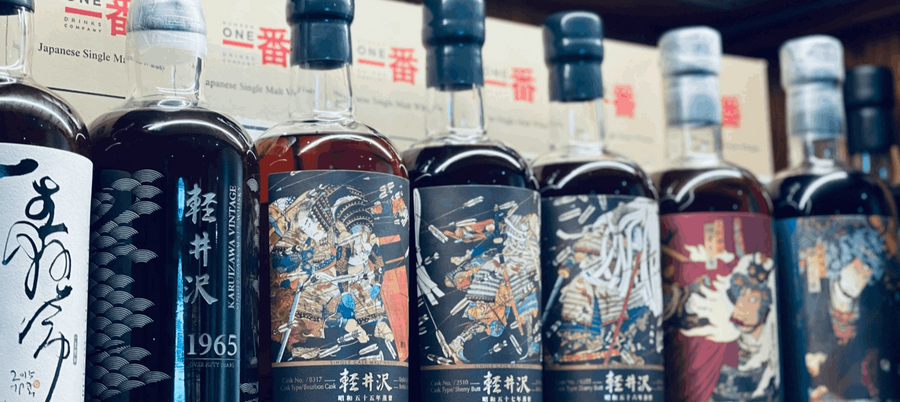
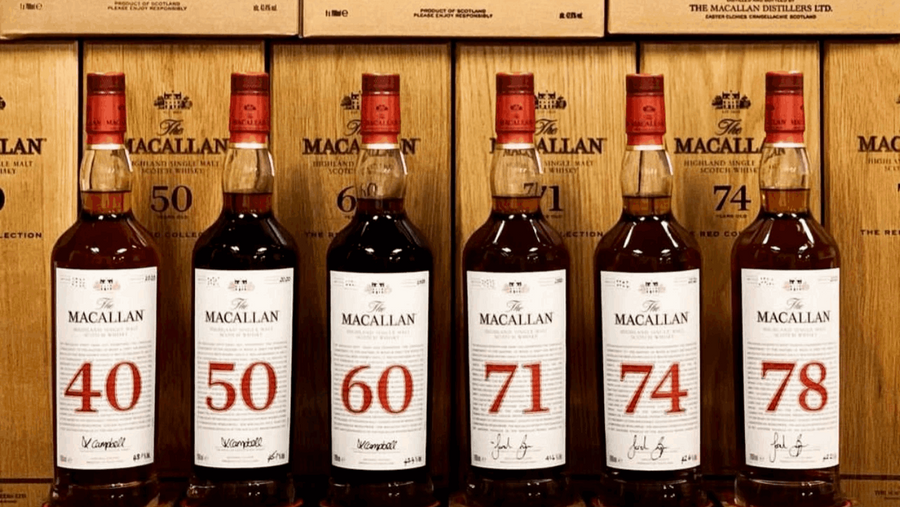
If your cabinet holds Hibiki 30, Macallan, Karuizawa or other exceptional bottles and you seek a safe, transparent sale at a strong price, we are here. Extensive international secondary-market data and specialist authentication help identify edition premiums and provide individual cash offers estimated from edition, condition and market references for you to compare.
Want to understand recent market conditions for your collection? WhatsApp (852) 46135750 and send a bottle photograph for an initial online appraisal.
Whisky buyback valuation
Have a similar bottle? Get a free initial quote
For one bottle or a larger collection, send photos first and we will reply with market-aware guidance.
- Edition and vintage check
- Same-day initial quote
- Hong Kong pickup or in-store handover
Please show the front label, back label, capsule, fill level, box, certificate, and any visible defects.